Sticky post

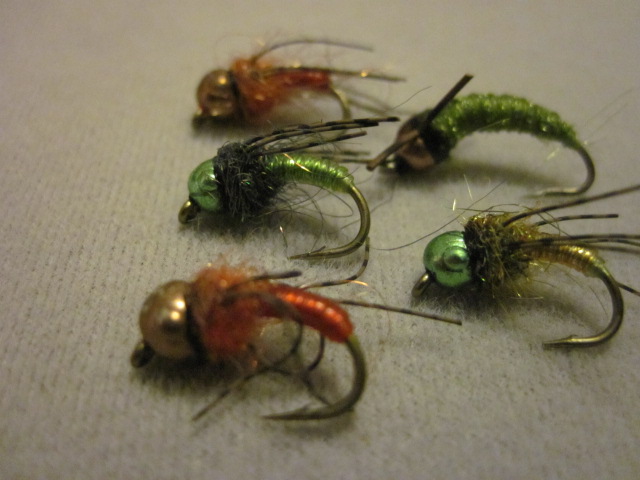
SINK RATES OF FLIES TIED WITH TUNGSTEN AND BRASS BEADS

Getting down to the bottom of the river is critical for success when fishing weighted nymphs. Fly fishermen use a variety of techniques to do this, mainly by adding lead split shot to the trace or incorporating brass or tungsten beads into their nymph patterns. Common logic is that materials with high bulk densities, such as Tungsten, sink fastest and that the heavier the bead … Continue reading SINK RATES OF FLIES TIED WITH TUNGSTEN AND BRASS BEADS

Sticky post

ANALYSING TROUT RISE FORMS – A LOST SKILL?

Words: Alan Bulmer   Images: Tim Angeli When I was young and learning to fly fish I was given a tattered book on trout fishing by a curmudgeonly old friend of my fathers. He took me aside, gruffly told me that I should read the book as it contained a wealth of useful information, attempted a wry smile and shuffled off. The book was “Trout fishing … Continue reading ANALYSING TROUT RISE FORMS – A LOST SKILL?

WHY LONGER RODS ARE BETTER

Over the past few years I have become steadily more convinced that longer spinning and fly rods are ideal for use on wide estuarine flats, especially spinning rods 9’ (2.74 metres) or longer and fly rods of around 9’6” (2.89 metres). There are many reasons for this change in thinking but simple physics and improved rod manufacturing technology are the primary drivers. SPINNING RODS Let’s … Continue reading WHY LONGER RODS ARE BETTER

WHERE TO FIND FISH IN HARBOURS

In “Stalking the Flats – What to look for” I listed some of the things to look out for which give a clue as to where fish will be holding in estuarine flats. Check it out: http://-https://activeanglingnz.com/2014/04/21/stalking-the-flats-part-2-what-to-look-for/ Over the weekend I happened upon a publication from Mark Morrison et al entitled “Linking marine fisheries species to biogenic habitats in New Zealand: a review and synthesis of … Continue reading WHERE TO FIND FISH IN HARBOURS

CHOOSING A LURE COLOUR TO SUIT THE CONDITIONS

Photos: Paul Smith, Jim Lanfear & Alan Bulmer I recently stumbled upon an article http://www.tacklemaking.com entitled “Colour theory for fishing lures”. While the article is written from an American angling perspective it got me thinking about the most effective colours for flies and lures when fishing the estuarine flats in NZ. Before I add my thoughts read what they had to say below:- DIFFERENT FISH … Continue reading CHOOSING A LURE COLOUR TO SUIT THE CONDITIONS

IS DAWN THE BEST TIME TO FISH?

Written By: Alan Bulmer   Photos: Paul Smith & Mark Hoffman Recently I received a fascinating e-mail from Dr Mike Ladle in the UK describing his experiment to see whether fish activity increased around dawn. Mike is convinced that fishing at the change of light at dawn is the most productive time of day and designed an experiment to try and prove this. Mike actually recorded the number of … Continue reading IS DAWN THE BEST TIME TO FISH?

TARGETING TREVALLY

One of the most sought after estuarine flats targets is trevally. Nicknamed the “Silver Prince” they are a difficult fish to hook and often can be even harder to land. The larger specimens encountered in estuarine environments tend to hunt alone, unlike in the open ocean where schools of fish are common. Tagging studies by local fisheries scientists have shown that trevally are not a wide ranging … Continue reading TARGETING TREVALLY

WAITETI STREAM – ROTORUA’S TROUT FISHING GEM

It had taken months to finally arrive but Thursday May 14th was the day Hamish and I had been waiting for since we opened our 2014 Christmas presents. There, in amongst the parcels with the names of others, was a small envelope which contained a voucher telling us that we would be sharing a guided fishing trip with Kiyoshi Nakagawa (Yoshi) in the rivers around … Continue reading WAITETI STREAM – ROTORUA’S TROUT FISHING GEM

MOORED BOATS ARE FISH MAGNETS

In order to successfully fish estuarine flats it is important to be always on the lookout for places where fish will likely congregate. Features such as subsurface rocks and weed beds are regularly identified as fish holding areas and need no further discussion. However, one of the most obvious fish attracting features in an estuary is one that is often overlooked completely by anglers, namely … Continue reading MOORED BOATS ARE FISH MAGNETS