Lead Image: Mark Hoffman
Several years ago, I wrote an article entitled “The Barometric Pressure Myth”. The article examined whether barometric pressure could be used to predict when fish were likely to feed, especially in freshwater.
The key takeaway from this article was that barometric pressure alone was not reliable in identifying fish feeding patterns in freshwater. Click on this link to read the full article. THE BAROMETRIC PRESSURE MYTH
However, barometric pressure does play a huge part in determining where fish will be found on the saltwater flats on any given day. This is not due to barometric pressure directly influencing what fish can “feel” below the water surface, but rather the result of a phenomenon called the “inverse barometer effect”. This effect means that variations in barometric pressure above or below 1013 hPa lead to differences in predicted tide height. The bigger the variation in barometric pressure from 1013 hPa the larger the difference in water level, and the more pronounced the effect on fish behaviour.
Most people are unaware that tide tables are calculated based on a standard average pressure of 1013 hPa. As barometric pressure falls below this standard reference pressure the atmosphere exerts less downward force on the ocean’s surface. This allows the sea level to rise higher than predicted in the tide table.
Conversely, barometric pressures higher than 1013 hPa exert more downward force on the water surface which drives the sea level to fall below the level predicted in tide tables.
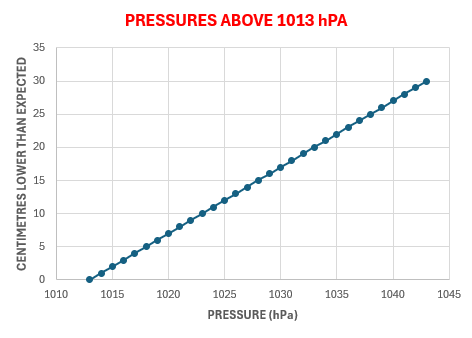
The “inverse barometer effect” states that for every hPa change in barometric pressure above or below 1013 hPa the water level will change by roughly 1 cm. If the barometric pressure is above 1013 hPa then the tide will end up being lower than predicted. If the barometric pressure is below 1013 hPa then the tide will end up being higher.
What this means for anglers is that the water level on shallow flats at low tide could be significantly lower or higher than predicted. Think for a moment about the consequences of this.
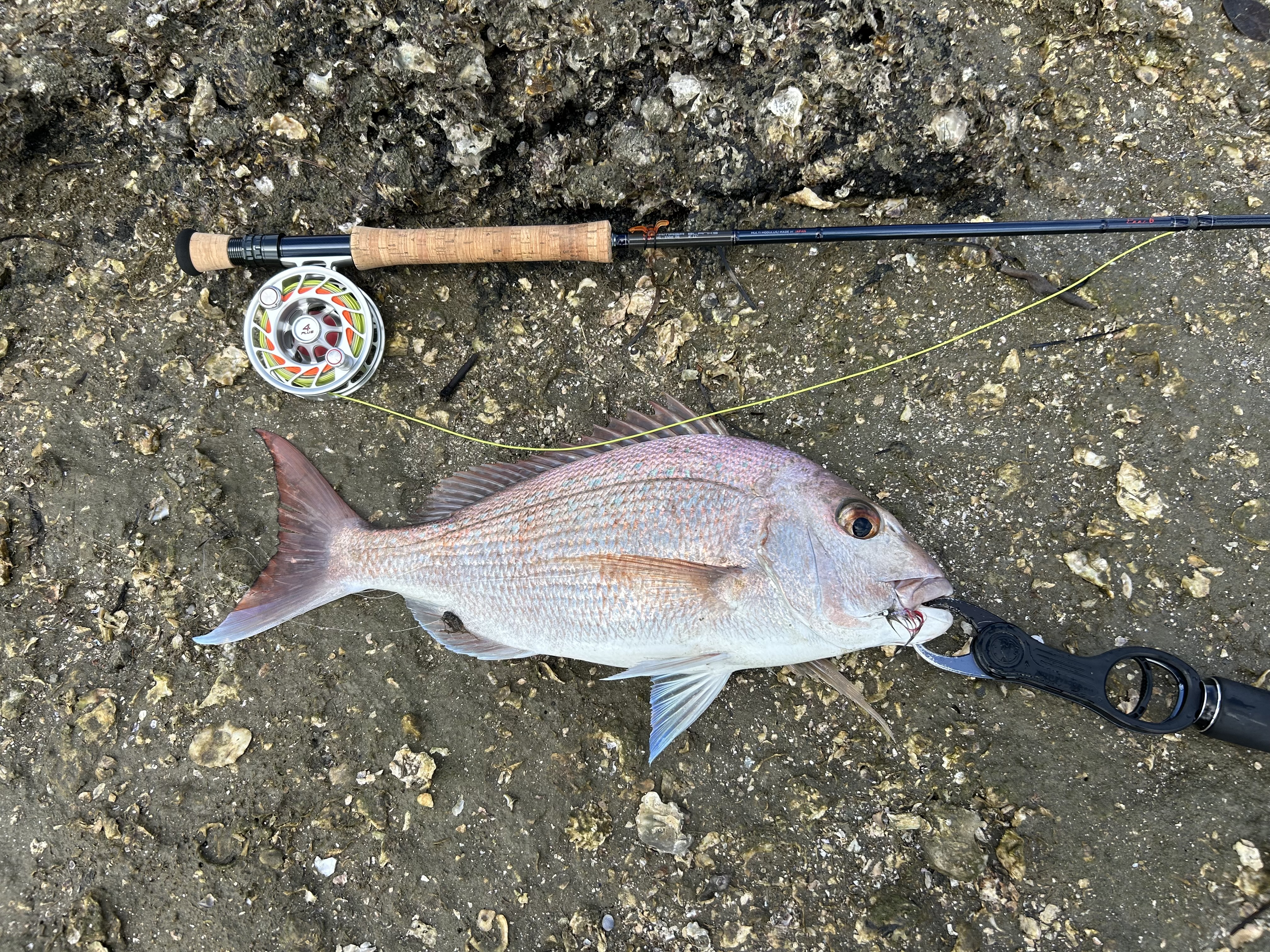
If it is lower, then fish will leave the area earlier to avoid being stranded or risk becoming an easier target for predators, especially birds. If it is higher, then the fish are more inclined to stay there for longer as it is not as risky as being in very shallow water.
Fish are very attuned to the effect of the inverse barometer phenomenon as they can easily feel changes in current speed and depth. Obviously, when the barometric pressure is high and the endpoint tide level lower, then the water flow is faster than normal throughout the tide cycle as more water is leaving the flat in the same period of time. Fish can feel the increase in flow and can also see that the water level is dropping quickly. This generally makes them leave the flat early. In shallow areas this can be up to an hour earlier than expected.
When the pressure is lower current flows and depth changes are reduced. There isn’t the same urgency to get off a shallow flat and head to deep water so fish can feed actively for longer.
How can knowledge of this effect be used to the angler’s advantage? I’ll illustrate this by a couple of examples.
One area that I fish regularly is downstream of a shell bank. The shell bank is completely visible at low tide and at high tide there is about 1.5 metres of water covering the bank. At dead low tide the water on the down current side of the bank is only 0.5 – 1.5 metres deep. Predatory fish move into the downstream side of the shell bank when the water level on top of the bank drops to 1.0 metre and a current rip forms. They stay there picking off disoriented baitfish passing over the bank until the rip dies off, just before the shell bank is exposed. Before I discovered the inverse barometer effect, I looked at the tide chart and tried to time my arrival at the bank to coincide with the optimum depth for fly fishing. More often than not, I got to the shell bank too late and missed the peak action or occasionally too early and been unable to catch anything for up to 30 minutes. Getting the timing right means it is possible to catch 3 or 4 fish in short order before they vacate when the water gets too shallow. Getting it wrong means you may only get 1 fish in a session. Now I know how to use barometric pressure to correct the tide heights I can time my arrival at the shell bank much more accurately and reap the rewards.
Another remote area I fish is a series of rock pools interspersed along a reef. These pools never drain completely but the entrance to them occasionally gets quite shallow which restricts safe access for fish to and from the pool, especially during spring tides. The pools themselves are normally only 3 metres deep at low tide and it finding fish in the pool as the tide dropped was always a bit “hit and miss”. Success was particularly erratic during the summer months when the barometric pressure was high. I now realise that the fish feeding in the pool exit well before dead low tide when there is a spring low on a day with a high barometric pressure as the water can end up being up to 30 or 40 cm lower than the tide chart indicates. For them it must be like sitting in a bath after the plug has been pulled out and thus the urge to get back to deeper water must be very strong. On these days it is possible to get out to the reef and the pools much earlier than normal and target the fish before they bolt for deeper water. This is what I now do.
Fish don’t always move off the flats or out of shallow pools early enough, especially on days where the barometric pressure is high and there is an exceptionally low spring tide. Three times this year alone in a spot north of Auckland, I’ve discovered several 75 – 100 cm kingfish circling a 900 m2 rock pool that they have been stranded in as the tide dropped more quickly than they expected. The pool was also full of bemused baitfish which are no longer being chased as the kingfish are preoccupied in finding a way out of the pool. It is obvious that the kingfish herded the baitfish into the pool to ambush them but failed to get out before the water level dropped to the point where the exits were too shallow for a large predator to safely negotiate.
To take away the need for any calculation of the inverse barometer effect I’ve constructed two graphs. See below. One for barometric pressures above 1013 hPa and one for pressures below 1013 hPa. Simply find the pressure on the X axis of the relevant graph. Trace a vertical line with your finger until it intersects with the blue line and read off the height correction off the Y axis.
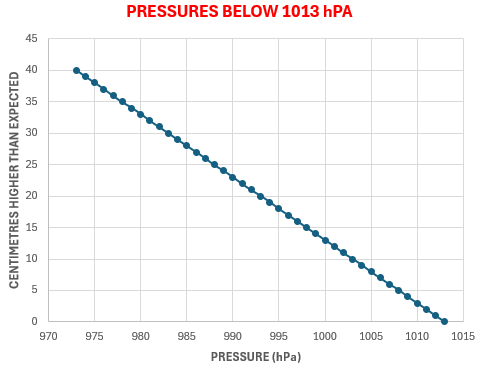
Note that the barometric pressure has to be stable for the inverse barometer effect to occur. If the barometric pressure is fluctuating wildly then the effect will not be as pronounced. It works best to predict tide height during stable weather periods.
The other thing to be considered is the effect of waves created by building wind action. Waves will exacerbate the effect and make the apparent depth even less, especially from the perspective of the fish.
Before I go out I consult the Tides4fishing website for the area I’m fishing (https://tides4fishing.com/) to see what the current barometric pressure is. I then scroll down to look at the tide graph and make the necessary adjustments to determine when I should be going out to my chosen spot on the flat. This takes a wee while to master but it is worth the effort.
There is no doubt that your catch rates will improve if you can get on the flats when fish are feeding and not fleeing to deeper water as the tide drops quickly. The inverse barometer effect is the key to understanding how, where and when fish move on the shallow flats. Once you’ve figured out tidal movement on your favourite flat it should be possible to make sure you are in the right place at the right time to make the most of any opportunities presented.
Finally, to safely fish the flats it is important that every angler understands tidal movement thoroughly. I’d strongly recommend you check out the following articles before venturing out fishing. TIDES AND SAFETY – THE RULE OF TWELFTHS and USING TIDES TO PREDICT WHEN TO FISH
If you’ve enjoyed this technical article and would like to read more like it then visit the Active Angling NZ website (www.activeanglingnz.com)

